
Most bodies have at least some estrogen. Some bodies have a lot, and some bodies have very little. But nearly everyone has some.
An earlier blog of ours discussed how almost everyone experiences hormonal transitions in life, and that hormonal transitions affect how we experience the world because hormone receptors are all over the body and sex steroid hormones (estrogens, testosterone, and progesterone) don’t just stay in one body system or cell type. In this follow-up to that blog, we’re going to dive into the depths of where receptors for estrogens are in the body and how they effect body processes. Stay tuned for deep dives into progesterone and testosterone receptors.
TABLE OF CONTENTS
- A Quick Review of Sex Steroid Hormones
- Why Are They Named “Sex Steroids”?
- Where Do Estrogens Get Made In The Body?
- Where Are Estrogen Receptors In The Body?
- So What Happens When An Estrogen Molecule Finds An Estrogen Receptor?
- OK, So An Estrogen Molecule Finds An Estrogen Receptor….What Then?
- Still reading? Bodies are so cool!
- References
A Quick Review of Sex Steroid Hormones
A hormone is a chemical messenger. We want to stress that hormones don’t control body systems; they carry information. There are so many factors that impact how loud a hormone’s message to the cell, tissue, or body process is. Much of that quietness or loudness happens within individual cells, but there can be overriding genetic code that tunes a body’s response to more or less receptive to hormonal messages (and several other health factors!)
A “steroid” hormone is one that is manufactured from cholesterol (this is one of the big reasons why we need some cholesterol to stay healthy!) and has a specific chemical structure. The major steroid hormones types in the body are glucocorticoids, mineralcorticoids, and the sex steroids: androgens, estrogens, and progestogens.
Glucocorticoids – produced by the adrenal glands. Glucocorticoids have big roles in inflammation an immunology in the body. Cortisol is an example of a glucocoriticoid.
Mineralcorticoids – also produced in the adrenal glands. These control the balance of salts, electrolytes and water in the body. The most commonly known example is aldosterone.
Sex steroids – produced mostly in the gonads (ovaries, testicles,) and in the adrenal glands (and other places in the body through conversion from other hormones). The major sex steroids are estrogens, androgens, and progestogens.
Each type of steroid hormone has specific functions, even though those functions can overlap. Sex steroids can impact inflammation and immunology, as well as the chemical balance of salts, electrolytes, and water in the body!
Why Are They Named “Sex Steroids”?
They are called “sex steroids” because humans first figured out that testosterone, estrogen, and progesterone are made in the testicles and ovaries. We knew that that they did some heavy lifting during fetal development, puberty, and pregnancy. They are closely tied to sexual and reproductive functions. We’ve since learned that these “sex” steroids are made in other places in the body and affect many other tissues in the body, too. They’re not just about sex and reproduction.
We know that estrogens when interacting with estrogen receptors can pass along messages to turn chemical processes on and off in the body. They can do this in cells within DNA itself, and as messages between cells/systems.
A quick note:
Estrogen shows up in the body in multiple forms:
- Estrone. This is often referred to as E1, and is the main form of estrogen found in bodies with ovaries after menopause.
- Estradiol – this is what we use in gender affirming care. This is often referred to as E2 and is found in higher quantities in most menstruating bodies.
- Estriol – this form of estrogen is most active during pregnancy. It’s E3.
- Estretrol – E4! This one is produced during fetal development by the fetus.
If we use the term “estrogen” or “estrogens” we’re referring to any one of the forms. If we’re talking about E2 specifically, we’ll use “estradiol.”
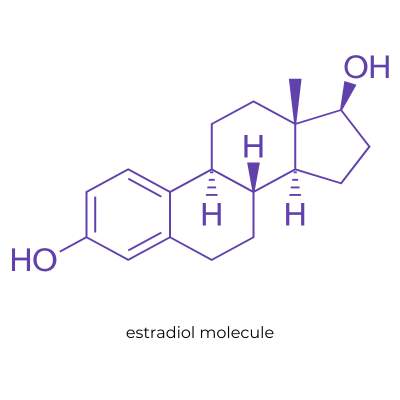
Where Do Estrogens Get Made In The Body?
Fun fact: estrogens are made out of androgens!
In bodies with ovaries:
Estrone (E1) is mostly made outside of the ovaries, but can be converted to estradiol in fat and breast tissue, smooth muscle cells, brain and bone cells, and in the linings of blood vessels. Fancy!
Most of estradiol (E2) is made in the ovaries, but (see E1 above) can also be produced in the liver, the pancreas, the adrenal glands, in fat, breast, muscle, and bone cells, in the brain, in blood vessels, and by the placenta.
Estriol (E3) is made by the placenta.
Estretrol (E4) is ONLY made in the fetal liver.
In bodies with testicles, estrogens are mostly created in the testicles and in sperm, in fat and bone, and the adrenal glands.
The starting block for all of these hormones is cholesterol, specifically low-density (LDL) cholesterol. IT might seem odd that hormones depend on the presence of a chemical that we’re told is healthiest in lower quantities in the body. While too much LDL cholesterol can raise heart disease risk, the body needs some to function and be healthy. Bodies tend to thrive the most when we stay in healthy ranges: too much of a good thing, as well as too little of a good thing, can cause problems.
Where Are Estrogen Receptors In The Body?
Sure feels like everywhere! Literally: you have them in your skin!
Estrogen receptors are located both in/on cell membranes (so the key/lock controls getting in to the cell) within cells (in the body of the cell where things happen,) and within the nucleus of cells, in DNA, where the code for how bodies work is constantly being updated. In biochem language, receptors are “expressed” rather than “located” as they can be on, off, or somewhere in-between. We’ll keep it simplified with “where are they found?”
The presence of receptors that take an E-shaped key (estrogen receptors!) meeting up with an estrogen molecule is how estrogen gets primed for use in the body.
There are three types of estrogen receptors (that we know of! Science suspects that there are more!)
Type 1 – ERα (Estrogen Receptor alpha)
Found in:
- the hypothalamus and hippocampus in the brain
- the testicles, ovaries, uterine lining (endometrium,) and the prostate in reproductive tracts
- in the kidneys and liver
- in breast tissue
- muscle tissue
- fatty tissue.
- sebaceous glands in hair follicles
Type 2 – ERβ (Estrogen Receptor beta)
- the testicles, ovaries, and prostate
- the linings of blood vessels
- the bladder
- the colon
- the adrenal glands
- the pancreas
- muscle tissue
- fatty tissue
- skin, both the epidermis, which is the outer layer of skin, and in skin connective tissue
- more parts of hair follicles than receptor alpha
A third type of estrogen receptor was more recently discovered: GPER/GPER1. It appears to regulate how estradiol works between cells and within them, and appears to be the STAT messenger: when activated, processes dependent on GPER/GPER1 happen in a matter of minutes rather than hours. This is amazing and complicated biochemistry. So cool!
GPER/GPER1 is found in:
- the brain, spinal cord, and nerves
- the ovaries and testicles
- breast tissue (mammary glands)
- the pancreas, liver, and kidney,
- adrenal and pituitary glands
- the cardiovascular system
- fatty tissue
- the placenta
- muscle tissue
- immune cells
- bone tissue
- in cartilage
- in skin

Emw, CC BY-SA 3.0 https://creativecommons.org/licenses/by-sa/3.0, via Wikimedia Commons
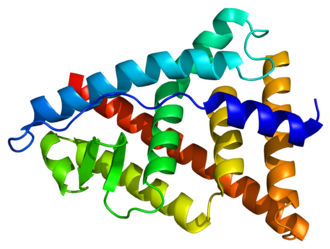
Emw, CC BY-SA 3.0 https://creativecommons.org/licenses/by-sa/3.0, via Wikimedia Commons
sourced from Tirado-Garibay, A. C., Falcón-Ruiz, E. A., Ochoa-Zarzosa, A., & López-Meza, J. E. (2023). GPER: An Estrogen Receptor Key in Metastasis and Tumoral Microenvironments. International Journal of Molecular Sciences, 24(19), 14993. https://doi.org/10.3390/ijms241914993
Remember the lock/key thing?
Estradiol (E2) fits into Type 1/alpha receptors, Type 2/beta receptors, and GPER receptors. It appears that GPER binds to E2, but not the other receptors. E2 binds more strongly to alpha and beta receptors than to GPER receptors.
Estrone (E1) prefers alpha receptors, but does bind to beta receptors, and binds less strongly to both alpha and beta receptors than E2 does. It is considered a “weaker” estrogen because this binding isn’t as strong.
E3 and E4 have less binding ability than both E1 and E2, and hang out with alpha and beta receptors, as far as we know.
So What Happens When An Estrogen Molecule Finds An Estrogen Receptor?
Our understanding of the human body and its biochemistry is always evolving, and this write up necessarily simplifies some very complex science. As clinicians, part of our role is translating that science into information that is useful and understandable for patients while being transparent about the limits of what is currently known. We’ve drawn from several papers that take a deeper look at estrogens and estrogen receptors, and this information may change as the evidence and our understanding continue to grow.
A VERY BIG NOTE: almost all of the studies on estrogen receptors in humans are either done with tissue samples or are looking at populations of cis people. BUT: estrogen receptors are in cells in all people. BUT: estrogen receptors are in cells in all people. There may be more or less of these receptors in various parts of the body based on conditions during fetal development, your genetics, your gene expression, your other health conditions, and your environmental exposures.
OK, So An Estrogen Molecule Finds An Estrogen Receptor….What Then?
Estrogens via alpha receptors:
In the brain:
- enhance learning
- might change how we classify food as “cool” (socially acquired food preference)
- have anti-anxiety and antidepressant effects
- affect aggressive behaviors
- affect how we are motivated and experience rewards
- enhance social learning
- enhance how we store memories
- improve how adaptable neurons are
- affects spatial memory
- protect against cognitive decline
- protect against some brain disorders
- strengthen the blood brain barrier
In other body systems:
Estrogens via estrogen receptors:
- help protect against high blood pressure via multiple pathways, but largely by helping blood vessels to relax.
- appear to protect against inside-the-eye high blood pressure, too!
- help prevent against plaque build-up in blood vessels.
- support healing in existing heart failure.
- influence the development of the urinary, genital, lung, and prostate structures in fetal development.
- are critically important in the development of the fetal brain.
- signals breast and endometrial lining cells (in the uterus) to grow during puberty.
- signal mammary glands to develop in preparation for milk production during pregnancy.
- help to regulate the menstrual cycle.
- appears to make collagen more elastic and less fibrous, or “stringy”.
- affect bone remodeling, bone density, and is a signal factor in when our bones stop growing in late puberty (as compared to bone turnover throughout life.)
- impact blood sugar, glucose metabolism, and diabetes risk.
- affect the immune system and may increase the risk or severity of autoimmune disorders.
- affect how fast cells grow and divide, and how long they live.
- this is perhaps most obvious in hormone-dependent cancers, where estrogen can increase how fast a cancer grows.
GPER/GPER1 receptors are a subject of intense study and appear to be strong actors in the protective benefits of estrogens. We expect that in coming years we’ll see new and highly specialized SERMs that are based on GPER/GPER1 receptors. Maybe they’ll open up whole new ways of fine-tuning gender care.
Still reading? Bodies are so cool!
We’d like to stress that we (meaning humans in general, not just the QueerDoc team) are still learning about how complex the body is and the roles that hormones play in bodies. Some of the ways that estrogens/estrogen receptors impact bodies are protective: they help helps bodies adapt and thrive in many ways. In other ways, they can negatively impact how a body functions or how healthy an individual is. How an estrogen paired with a receptor works in any single body is dependent on hundreds of factors. When we talk to people about changing the balance of hormones in their bodies, we are interested in each person’s goals, big and small, physical, emotional, and mental, and how changing hormone ratios can impact overall well-being.
Several changes are expected when adding estradiol to bodies with testicles, learn more about them here. We also use estradiol in care for queer, trans, and gender diverse folks going through peri-menopause, menopause, and post-menopausal life stages, and in people taking T who are experiencing genital atrophy. There is increasing interest in using estrogens in skin and hair care.
References
Thornton MJ, Taylor AH, Mulligan K, Al-Azzawi F, Lyon CC, O’Driscoll J, Messenger AG. The distribution of estrogen receptor beta is distinct to that of estrogen receptor alpha and the androgen receptor in human skin and the pilosebaceous unit. J Investig Dermatol Symp Proc. 2003 Jun;8(1):100-3. doi: 10.1046/j.1523-1747.2003.12181.x. PMID: 12895004.
Prossnitz, E.R., Barton, M. The G protein-coupled oestrogen receptor GPER in health and disease: an update. Nat Rev Endocrinol 19, 407–424 (2023). https://doi.org/10.1038/s41574-023-00822-7
Fuentes N, Silveyra P. Estrogen receptor signaling mechanisms. Adv Protein Chem Struct Biol. 2019;116:135-170. doi: 10.1016/bs.apcsb.2019.01.001. Epub 2019 Feb 4. PMID: 31036290; PMCID: PMC6533072.
Chen P, Li B, Ou-Yang L. Role of estrogen receptors in health and disease. Front Endocrinol (Lausanne). 2022 Aug 18;13:839005. doi: 10.3389/fendo.2022.839005. PMID: 36060947; PMCID: PMC9433670.
Heldring N, Pike A, Andersson S, et al. Estrogen Receptors: How Do They Signal and What Are Their Targets. Physiol Rev. 2007 Jul ;87(3):905-931. doi: 10.1152/physrev.00026.2006.
Prossnitz ER, Arterburn JB, Sklar LA. GPR30: A G protein-coupled receptor for estrogen. Mol Cell Endocrinol. 2007 Feb;265-266:138-42. doi: 10.1016/j.mce.2006.12.010. Epub 2007 Jan 11. PMID: 17222505; PMCID: PMC1847610.
Luo J, Liu D. Does GPER Really Function as a G Protein-Coupled Estrogen Receptor in vivo? Front Endocrinol (Lausanne). 2020 Mar 31;11:148. doi: 10.3389/fendo.2020.00148. PMID: 32296387; PMCID: PMC7137379.
Pillerová M, Borbélyová V, Hodosy J, Riljak V, Renczés E, Frick KM, Tóthová Ľ. On the role of sex steroids in biological functions by classical and non-classical pathways. An update. Front Neuroendocrinol. 2021 Jul;62:100926. doi: 10.1016/j.yfrne.2021.100926. Epub 2021 Jun 3. PMID: 34089761; PMCID: PMC8523217.